
Last updated October 16, 2026
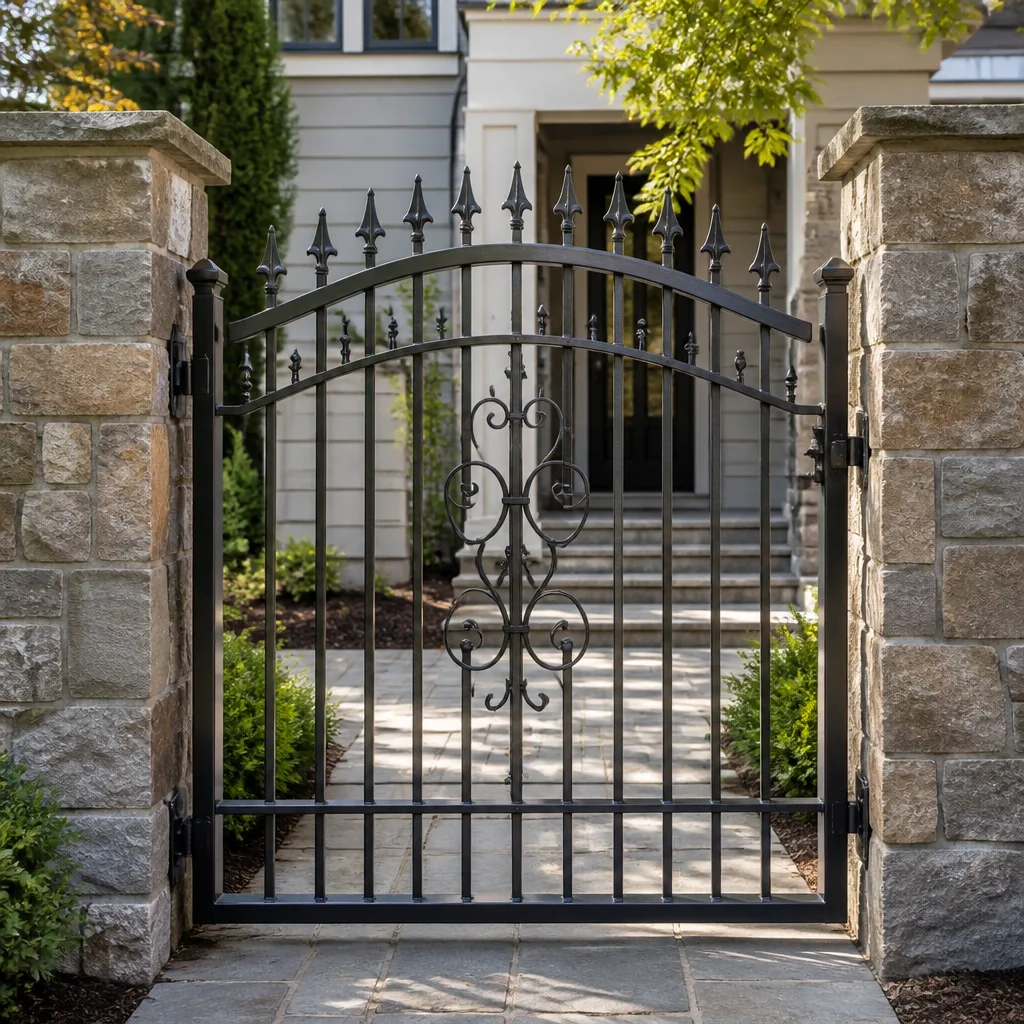 Wrought iron
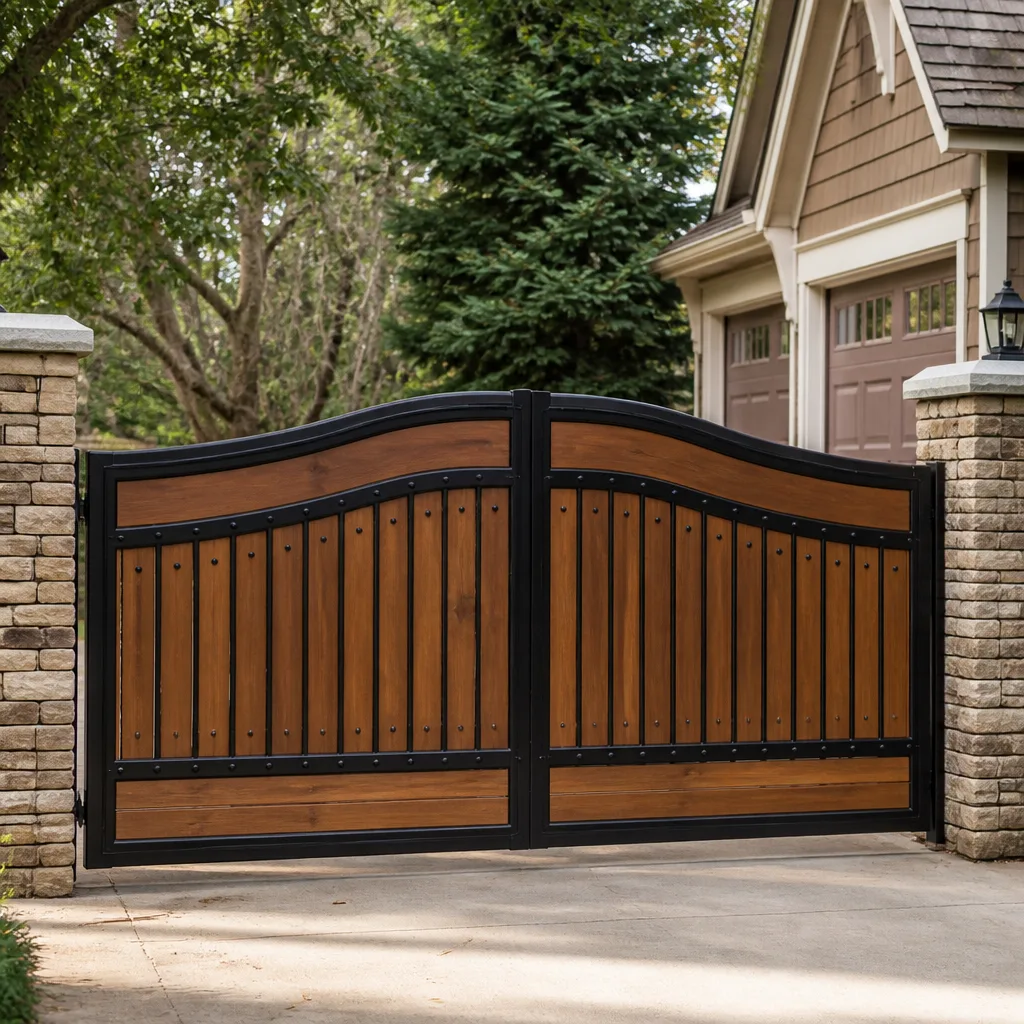 Wood & steel frame
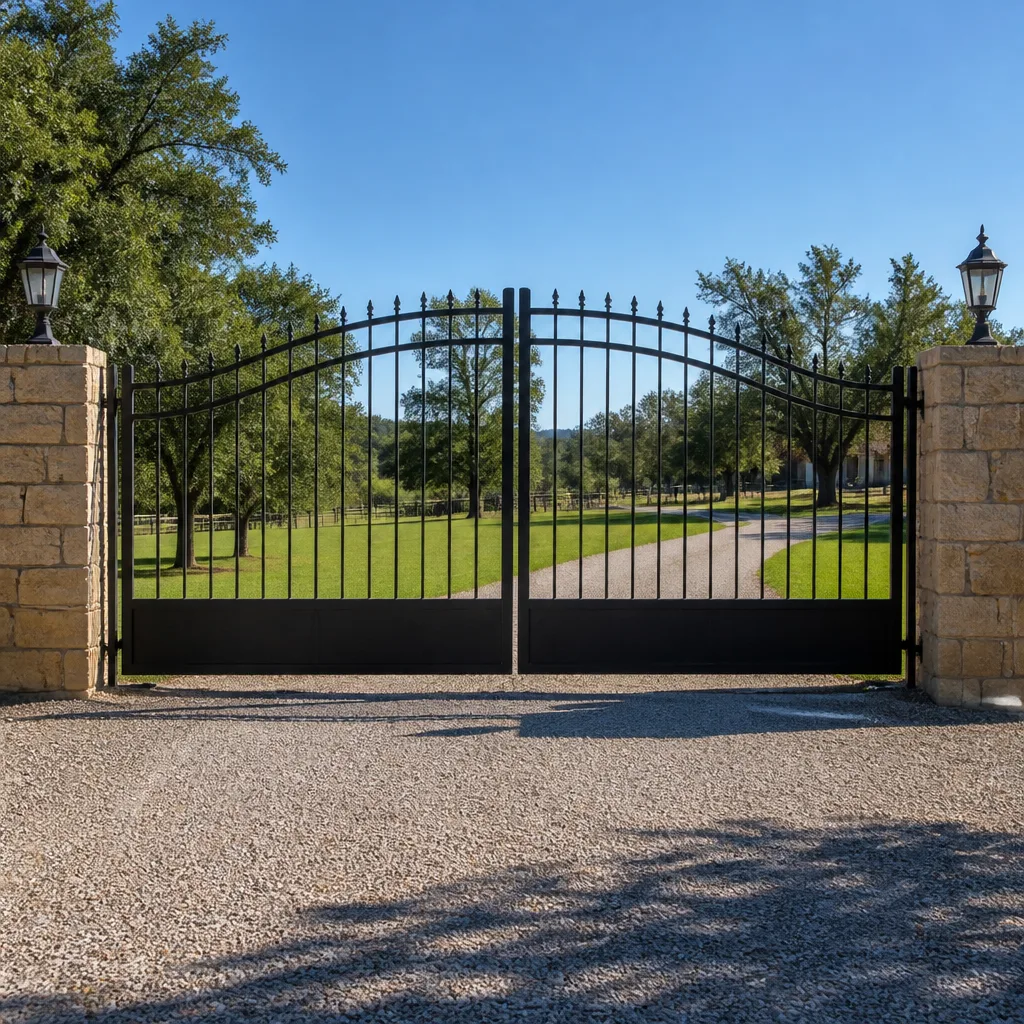 Farm & ranch
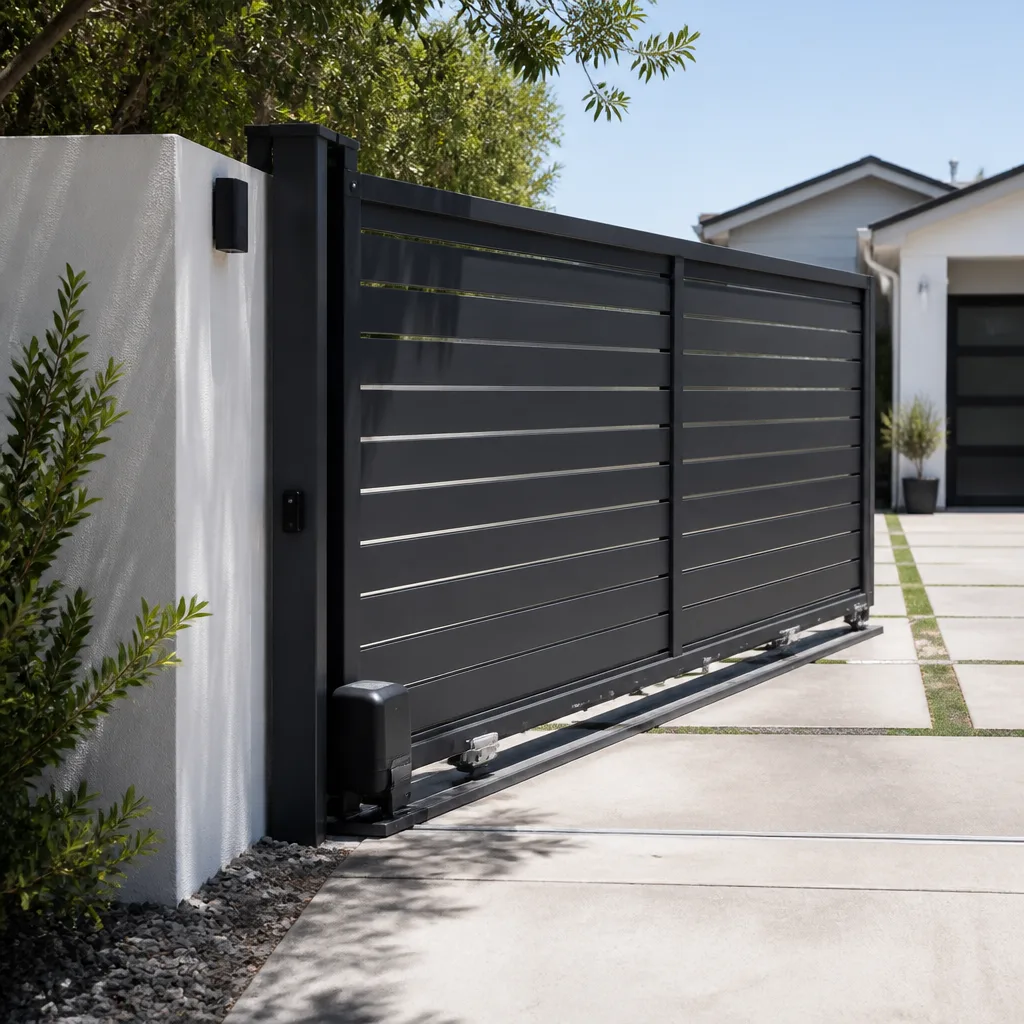 Sliding driveway gates
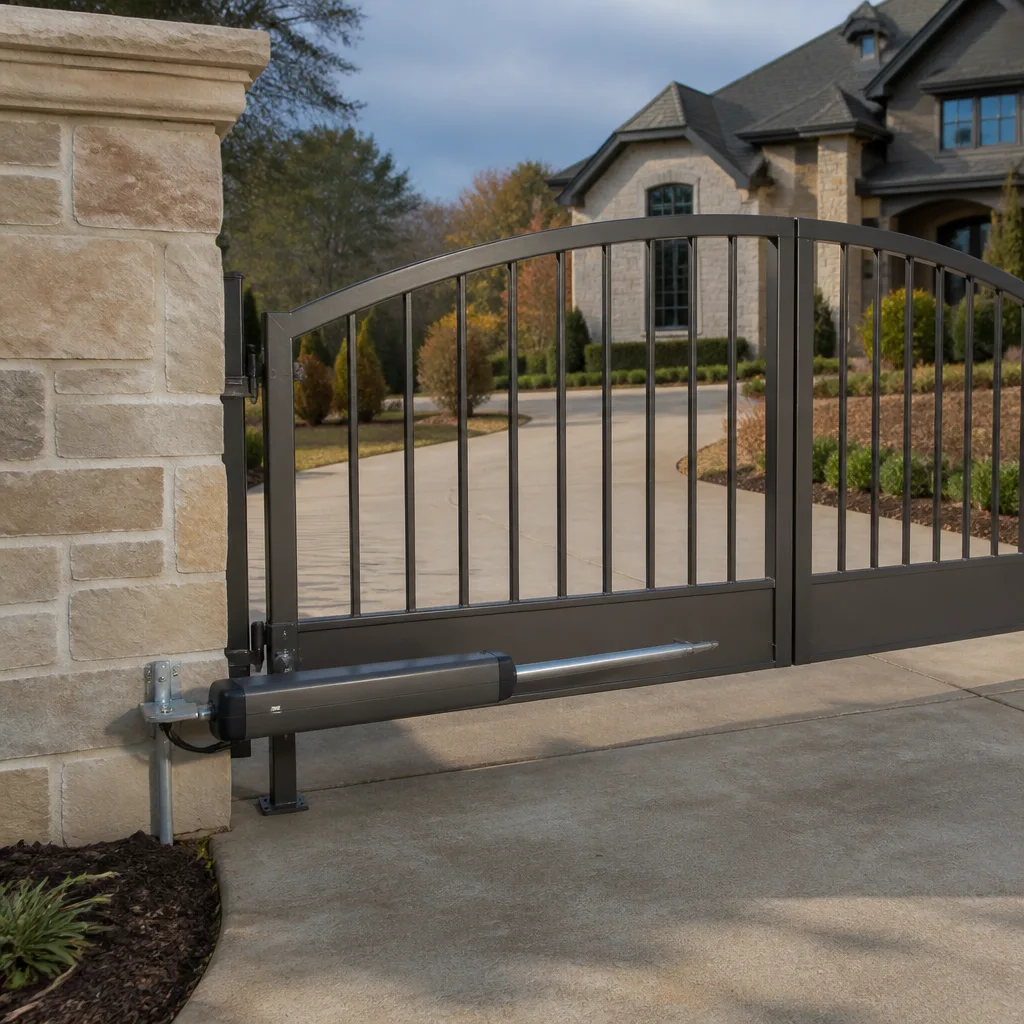 LiftMaster operators
Free on-site gate assessment - hinges, posts, and your LiftMaster or Nice gate operator checked before anything is quoted
The assessment is free and the quote is the invoice.
Get your free estimateGate Repair Warning Signs: A Long Beach Homeowner’s Reference Guide
A gate that hesitates for two seconds before opening is already telling you it will stop opening entirely within 60 days. Most Long Beach homeowners adjust their habits around the pause, the grind, the slight sag, instead of reading what those signals are actually saying about motor load, hinge wear, and post integrity. This guide names the specific early warnings, explains what each one means mechanically, and attaches a dollar figure to ignoring it. You’ll learn how to distinguish a $90 hinge adjustment from a $900 post replacement before the gate makes that decision for you.
Styles & brands we work with
Quick Answer
The most reliable gate repair warning signs in Long Beach are a hesitation pause before the gate moves, a change in operating sound (grinding, clicking, squealing, or thudding), visible sag at the latch side, rust blooming around welds and hinge plates, and intermittent remote or keypad failures that happen only sometimes. Any one of these signals means the gate is working harder than it should, and the repair cost rises the longer each one is ignored.
Table of Contents
- The Hesitation Pause: What Two Seconds Is Actually Telling You
- The Sound Index: Grinding, Clicking, Squealing, and Thudding Decoded
- Visible Rust vs. Subsurface Corrosion: The Three-Month Lag
- Post Lean Measurement: How to Check for Soil-Driven Drift
- Intermittent Remote Failure: Battery, Loop Detector, or Control Board
- Gate Sag and the Latch Line: When Clearance Gets Tight
- The Cost of Ignoring: What Each Warning Costs Now vs. Later
- Common Mistakes to Avoid
- When to Call a Professional
- Frequently Asked Questions
- The Bottom Line
The Hesitation Pause: What Two Seconds Is Actually Telling You
In our experience across Long Beach, the hesitation pause is the warning sign homeowners most often normalize. The remote clicks, nothing happens for a beat or two, then the gate starts moving. Most people assume it’s a dying remote battery or just “how the gate is.” It is not. That pause is the motor drawing higher torque than it should to overcome resistance somewhere in the system: a stiff hinge, a corroded roller track, a wheel bobbing out of its guide, or a motor capacitor that’s degrading and can no longer deliver instantaneous start current.
Here’s what the pause means mechanically:
- A 1-second pause: The motor is compensating for moderate resistance, often from dry or worn hinges, a slightly misaligned track, or a gate that has drifted out of level. This is usually a same-week repair in the $90 to $250 range.
- A 2 to 3-second pause: The motor is laboring against significant resistance or the start capacitor is failing. The capacitor is a $40 to $90 part, but continued operation will burn out the motor windings, pushing the repair to $400 to $800.
- A pause followed by a jerk or a skip: The gate is binding mid-travel, often because a roller has worn flat or a hinge has begun to seize. The jerking motion accelerates wear on every other component in the chain.
Coastal air accelerates this problem. Long Beach’s marine layer deposits salt and moisture on exposed gate hardware, and that film works its way into hinge pins and roller bearings even when the gate looks clean. A gate in Belmont Shore or Naples faces more atmospheric corrosion in a year than an inland gate faces in five. The pause is frequently the first outward sign that the gate’s internal friction has increased beyond what the motor was sized to handle.
What homeowners assume the pause means is “the remote is slow.” What it actually means is “the motor is working harder than it was designed to, and something is wearing out faster because of it.” The distinction matters because a remote battery costs $5 and a hinge adjustment costs $90, but a burned-out motor costs $500 to $900 and takes the gate out of service entirely.
If your gate hesitates before moving, our advice is to address it within two weeks. The failure curve on gate motors is not linear: a motor that compensates for resistance runs hot, and heat is what kills windings. The motor isn’t failing slowly. It’s failing on a schedule that accelerates the longer the pause continues.
The Sound Index: Grinding, Clicking, Squealing, and Thudding Decoded
Every gate has a baseline sound. Learn what yours sounds like on a good day, because changes in that sound are the earliest diagnostic information your gate will give you. Here’s a plain-language guide to what each sound means and how urgently it needs attention in a Long Beach context, and you can find Seasonal Gate Repair Care for Long Beach: Year-Round Homeowner’s Guide for maintenance timing.
Grinding is metal on metal with no lubrication and no give. In sliding gates, grinding most often means the rollers or track wheels have worn through their surface coating and are now running steel-on-steel. In swing gates, it’s usually a hinge pin that has lost its grease and begun to gall. Either way, the sound means friction, and friction means heat, and heat means premature failure. Grinding is a same-week repair: replacing worn rollers or servicing hinges typically runs $120 to $280 in Long Beach, depending on gate weight and roller count. A gate that grinds today will seize eventually, and a seized roller can damage the track itself.
Clicking is usually electrical, not mechanical. A single click when you press the remote but no movement means the control board is receiving the signal but the motor isn’t starting. That points to a starter capacitor, a relay, or a circuit board issue. Multiple rapid clicks often mean a limit switch or a safety sensor is chattering. Clicking can wait a few days if the gate still opens, but not weeks: an electrical fault that clicks today is a no-open gate tomorrow, and components like control boards for brands like Linear and Viking are not always stocked locally, meaning a longer outage if you wait until full failure.
Squealing is friction at a higher pitch, usually from a belt or a pulley in the gate motor itself, or from a hinge that’s lost its lubrication. A squeal on startup that fades is often a slipping drive belt, which is a $60 to $120 fix. A constant squeal through the full travel is more likely a bearing in the motor or an idler pulley. Squealing is the most benign sound on this list and can typically wait a week or two, but it’s worth noting that the belt or pulley that squeals is also slipping, and slipping wears surfaces unevenly. What’s a $90 belt replacement today can become a $300 pulley and shaft repair if the slip goes on long enough.
Thudding is impact. A thud when the gate reaches the fully open or fully closed position means the limit switch is not tripping when it should and the gate is hitting its mechanical stop. Every thud sends shock through the gate frame, the hinges, the motor mount, and the post anchors. In Long Beach, where many gates are mounted on stucco or masonry columns, repeated thudding cracks the stucco and loosens anchor bolts. A thud at the travel end is a same-week fix: limit switch adjustment or replacement runs $100 to $180 and saves the frame and column from accumulated stress. A thud mid-travel is more serious, usually indicating a broken roller or a foreign object in the track.
Our rule of thumb: grinding and thudding get same-week attention, clicking gets a diagnostic call, and squealing can wait a week or two if the gate is still moving smoothly. For a deeper look at motor-specific issues in Long Beach, see our gate motor repair guide.
Visible Rust vs. Subsurface Corrosion: The Three-Month Lag
The rust you can see is three months behind the rust that’s already structurally relevant. That lag exists because corrosion starts where paint, powder coating, or galvanizing has already been compromised: inside hinge barrels, under weld beads, at the base of posts where soil holds moisture against the steel. By the time rust blooms through to the visible surface, the oxidation underneath has been progressing for weeks or months.
In Long Beach, this timeline compresses. The marine layer that rolls in most evenings deposits salt and moisture on gate surfaces, and that thin film sits in the crevices that never fully dry. A gate on the Peninsula or in Alamitos Beach is exposed to more chloride-driven corrosion than a gate in Bixby Knolls or Signal Hill, and the difference shows up in how fast surface rust appears and how deep it runs once it does.
Here’s how to read what you’re seeing:
- Surface rust on a flat panel: This is cosmetic if caught early. Sanding and repainting runs $150 to $400 for a typical driveway gate in Long Beach. The rust is telling you the protective coating has failed, but the underlying steel is usually still sound.
- Rust at a weld joint or hinge plate: This is structural. Welds are stress concentrations, and corrosion at a stress point accelerates quickly. A rust line radiating from a hinge barrel means moisture is inside the hinge and the pin is corroding. Hinge replacement on a standard swing gate runs $200 to $500 installed.
- Rust at the post base with soil contact: This is the most serious location. The post is corroding at its highest-load point, where it anchors the entire gate. By the time you see rust staining at the base, the post wall has often thinned by 30% or more below grade. Post replacement in Long Beach runs $600 to $1,200 depending on the post size, mounting method, and whether the surrounding concrete or masonry needs to be demolished and re-poured.
- Blistering under paint or powder coating: The lift you see is corrosion expanding underneath the finish. The metal is oxidizing and the rust is pushing the coating off. Wire-brushing a blister reveals a pit, and pits are where gates eventually crack.
The right inspection isn’t visual alone. Tapping suspected areas with a small hammer or a wrench reveals hollow-sounding steel where corrosion has thinned the wall. But that’s a diagnostic step we recommend leaving to a professional who can assess load-bearing implications. A gate that fails because a corroded post snapped is a safety event, not just a repair.
For a full accounting of how corrosion affects different gate types in Long Beach’s climate, our gate repair overview walks through the specifics.
Post Lean Measurement: How to Check for Soil-Driven Drift
Long Beach’s soil composition varies block by block: sandy loam near the coast, clay-heavy soil inland, and fill material in some older neighborhoods. All of it moves, but clay soil is the worst offender for gate posts because it swells when wet and contracts when dry, cycling the post back and forth through the seasons. A gate post that was plumb when installed can drift out of vertical by two or three degrees within a few years, and that drift is not something the gate motor can compensate for indefinitely.
Here’s how to measure post lean with a standard 24-inch level:
- Place the level vertically against the gate post on the side facing the gate’s travel direction, and again on the side perpendicular to it. Check both planes: a post can be plumb front-to-back but leaning left-to-right.
- If the bubble sits flush against the line in both planes, the post is within normal tolerance. A 1-degree drift is workable; the gate hardware can usually accommodate it without binding.
- If the bubble sits outside the line by a bubble’s width or more, you’re at roughly 2 degrees of drift. At this point, the gate is hanging off-plumb and the motor is compensating for gravity every cycle. Hinges wear unevenly, rollers cup, and the gate’s weight distribution shifts toward the latch side.
- If the bubble pegs fully to one end, the post has drifted 3 degrees or more. This is structural territory. The gate is now pulling the post further out of plumb with every opening, and the cycle self-accelerates. Post re-setting or replacement is required, not optional.
A simpler field check: stand behind the gate and sight down the top rail from hinge post to latch post. A straight top rail that appears to dip or rise mid-span means the posts are out of alignment in opposite directions. You’ll also see it in the gap between the gate and the latch post: a gap that’s wide at the top and tight at the bottom says the hinge post is leaning away.
What drives this drift in Long Beach specifically is the wet winter and dry summer cycle. Posts set in clay soil, particularly in areas like Los Altos or near the Los Cerritos wetlands, move measurably between January and August. A post that measured plumb in the spring can be out by a degree in the fall. Annual post inspection is the cheapest maintenance you’ll do: identifying drift at 2 degrees means a $300 to $600 post reset and re-anchoring. Letting it go to 3-plus degrees means the post has likely broken its bond with the footing, and replacement with re-pouring runs $800 to $1,400.
If you’re seeing uneven gaps, post drift, or a gate that binds only when the weather changes, it’s worth a professional evaluation. We offer free estimates anywhere in Long Beach and will check post alignment as part of the assessment.
Intermittent Remote Failure: Battery, Loop Detector, or Control Board
An intermittent remote is the most misdiagnosed gate problem we see in Long Beach. The remote works in the morning but not the afternoon. It works from the street but not from the driveway. It works after you press it twice. Most homeowners swap the battery, find the problem persists, and either live with it or start pressing harder, as if determination were a signal protocol.
Here’s how to tell the three most common causes apart:
If it’s the battery or the remote itself:
- The failure is consistent with distance: it works close but not far. Remote batteries and remote transmitters degrade in output power, and the symptom is range loss.
- Replacing the battery fixes it. If it doesn’t, and you have a second remote that works fine, the remote itself is failing. Replacement remotes for LiftMaster, Linear, and Viking systems run $40 to $90 programmed.
If it’s the loop detector:
- The gate opens when you press the remote but won’t close, or closes but reopens immediately. The loop detector in the driveway senses vehicle mass and won’t allow the gate to close on a car that’s in the path. A failing loop detector gives false positives or false negatives.
- The failure is specific to location. If the gate behaves differently depending on where your car is sitting on the driveway, the loop detector is the suspect. Loop detector replacement runs $250 to $450 in Long Beach, and the loop wire may need to be re-cut into the driveway, which adds $500 to $900 if the old loop has failed entirely.
If it’s the control board:
- The failure is unpredictable and not tied to range, position, or weather. The gate opens sometimes, doesn’t other times, and the keypad at the post behaves the same way.
- Multiple functions act strangely: the safety sensors trip randomly, the gate reverses mid-travel, the keypad backlight flickers. Control boards for brands like Ghost Controls and DoorKing run $200 to $500 for the part, plus $150 to $300 for installation and programming.
In Long Beach, one additional factor is salt-air corrosion on the control board’s connectors and terminals. Boards mounted inside weather-tight boxes still breathe through weep holes, and the marine air deposits a fine conductive film on exposed terminals. Intermittent behavior that comes and goes with the humidity is often terminal corrosion, and a board cleaning with contact cleaner sometimes buys you another year.
Don’t replace the remote until you’ve ruled out the board and the loop. A remote is the cheapest part of the system, and replacing it first is the most common $60 mistake that doesn’t fix the problem. For a complete picture of how these systems interact, our electric gate repair page covers the full electrical architecture.
Gate Sag and the Latch Line: When Clearance Gets Tight
Every swing gate sags eventually. Weight plus gravity plus hinge wear means the latch side of the gate drops over time, and the clearance gap that was uniform when the gate was installed becomes tight at the latch and wide at the hinge. In Long Beach, where gates are often oversized for driveway security, the sag happens faster because the gate is heavier: a 12-foot steel gate weighs 300 to 500 pounds, and all of that weight pivots on two or three hinge points.
The easiest way to spot early sag is to look at the gap between the two gate leaves (for a double gate) or between the gate and the latch post (for a single gate). A healthy gate shows a gap of roughly 1/2 to 3/4 inch that’s consistent from top to bottom. When the top of the gap narrows while the bottom widens, the gate is sagging. You might also notice the gate scraping the ground at the latch side, or a latch that’s become hard to operate because the strike plate and the latch barrel no longer line up.
What sag means mechanically:
- Hinge bushing wear: The pivot bushings inside the hinge barrels have worn, allowing the gate to drop. Replacing bushings or hinges on a standard gate runs $200 to $450, depending on gate weight and hinge count.
- Post movement: The hinge post itself has drifted off-plumb, dropping the entire gate at the latch end. This goes back to the post lean section above and is a structural repair, not a hinge issue.
- Frame racking: The gate’s internal frame has twisted, usually from a combination of weight, wind, and hard closing cycles. Racking is the most expensive sag cause: a twisted frame means the gate is no longer square, and depending on material, the fix is either a frame reinforcement ($400 to $800) or full gate replacement ($1,500 to $4,000 for a typical Long Beach driveway gate).
Sag matters because it changes the load profile on the motor. A gate that’s sagging scrapes at the latch side, and that scrape is friction, and that friction is the same thing as the grinding discussed above. The motor draws more current to overcome the scrape, the windings run hotter, and the motor’s service life shortens by a percentage that compounds every month.
The repair window on sag is comfortable if you act early. Bushings and hinge replacement are same-day jobs, and the gate doesn’t need to come off its posts for most hinge replacements we do in Long Beach. The window closes once the frame starts racking or the post starts moving. If your gate scrapes at the latch side, call before you’re shopping for a full replacement.
The Cost of Ignoring: What Each Warning Costs Now vs. Later
Every warning sign in this guide has a now-price and a later-price. The later-price is what it costs after the warning has been ignored for long enough that the failure cascades. Here’s the accounting for Long Beach, based on the work we’ve priced and performed across the city:
| Warning Sign | Fix It Now | Cost If Ignored |
|---|---|---|
| Hesitation pause (1 second) | Hinge service, track alignment, or capacitor: $90 to $250 | Motor replacement: $400 to $800 |
| Grinding sound | Roller or hinge replacement: $120 to $280 | Track damage or seized roller: $500 to $900 |
| Squealing belt or pulley | Belt replacement or pulley service: $60 to $120 | Pulley and shaft repair: $250 to $400 |
| Thudding at travel end | Limit switch adjustment: $100 to $180 | Frame stress, cracked column, anchor repair: $400 to $1,000 |
| Rust at hinge or weld | Hinge replacement and surface treatment: $200 to $500 | Corroded post failure: $800 to $1,400 plus gate replacement if the gate drops |
| Post lean at 2 degrees | Post reset and re-anchoring: $300 to $600 | Post replacement with footing re-pour: $800 to $1,400 |
| Intermittent remote (board cause) | Board cleaning or replacement: $200 to $500 | Full motor and board replacement: $600 to $1,200 |
| Gate sag, hinge bushing | Bushing or hinge replacement: $200 to $450 | Frame racking repair or gate replacement: $800 to $4,000 |
These prices reflect the Long Beach market as of this writing. Your exact quote will depend on gate size, weight, material, and the specific components involved. Every repair we quote at Warden Gate Repair Long Beach includes a written price before any work starts, so you’ll never be surprised at the end. If you want a more detailed look at what repairs typically involve, our Long Beach gate repair page has the full breakdown.
Common Mistakes to Avoid
- Lubricating a gate that’s already grinding. Spraying lubricant on worn rollers or galling hinges quiets the symptom for a few days without addressing the wear. The metal has already lost its surface coating, and lubricant won’t restore it. The gate goes quiet, the homeowner thinks it’s fixed, and the component continues to degrade in silence.
- Replacing the remote before checking the board. The remote is the cheapest component in the system, so it’s the first thing people replace, and it’s usually not the failure point. Test a second remote, check the keypad, and observe whether the failure correlates with distance or location before buying new remotes for your Linear or Viking system.
- Ignoring a slow gate because it still works. A gate that moves slower than it used to is telling you the motor is working harder. “Slow but working” is the phase where a $150 repair becomes a $700 replacement. The window between slow and stopped is measured in weeks, not months.
- Painting over rust without treating it. Paint over untreated rust traps moisture and corrosion keeps progressing underneath the fresh coat. The blistering that follows is worse than the original rust: now the coating failure is hidden until it’s advanced. Sand, treat, prime, then paint – or have a professional handle it.
- Ignoring a thudding gate because the thud is quiet. Impact is cumulative. Every thud sends shock through the frame, posts, and motor mount, even if it doesn’t sound dramatic. The cracks in Long Beach stucco columns start as hairline fractures from exactly this kind of repeated impact.
- Adjusting the gate yourself without checking post alignment first. If the gate is binding because the posts have moved, adjusting the hinges or the track treats the symptom while the post continues to drift. You’ll be adjusting again in three months, and the post will be further gone by then.
- Waiting for total failure to call. Gates fail at the worst moments: the morning you’re running late, the night you have guests arriving, the weekend when every repair company is booked. The homeowners who avoid multi-day outages are the ones who call at the first warning sign, not the ones who wait for the gate to stop moving.
When to Call a Professional
Call when the hesitation pause appears. Call when the gate starts making a sound it didn’t make before. Call when the gap at the latch changes, when the post drifts off-plumb, when the remote works only sometimes. All of these are early-stage signals, and all of them are cheaper to address in the first two weeks than in the second two months. For help choosing who to call, see our guide on How to Hire a Gate Repair Contractor in Long Beach: A Step-by-Step Guide.
Call immediately if the gate thuds at the end of travel, grinds through the full opening cycle, or has visible rust at a hinge plate or post base. These are not maintenance items. They’re failures in progress.
Warden Gate Repair Long Beach offers free estimates throughout Long Beach. We’ll assess the gate, tell you what’s urgent and what can wait, and give you a written price before any work begins. Call (562) 512-6788 and you’ll reach a live person, any hour, any day.
Frequently Asked Questions
Gate repair in Long Beach typically runs $90 to $450 for most mechanical fixes (hinges, rollers, limit switches, belts), $200 to $500 for electrical and control board repairs, and $800 to $4,000 for structural repairs like post replacement or gate rebuilds. Your price depends on the gate’s size, weight, and the specific failure. Every Warden Gate Repair quote includes a written price before work starts. Call (562) 512-6788 for a free estimate.
A hesitation pause means the gate motor is drawing higher torque to overcome resistance somewhere in the system, usually from stiff hinges, worn rollers, a misaligned track, or a failing capacitor. It’s not a remote battery issue. Address it within two weeks to avoid motor damage, which turns a $90 to $250 repair into a $400 to $800 motor replacement.
Most mechanical repairs like hinge replacements, roller replacements, and limit switch adjustments are same-day jobs. Electrical diagnostics and control board replacements sometimes require parts that need to be ordered, particularly for Ghost Controls and DoorKing systems. When you call (562) 512-6788, we’ll tell you honestly whether it’s a same-day fix or a scheduled repair, and you’ll get a written price either way.
Measure the post with a level: under 2 degrees of drift usually means the post can be re-set and re-anchored, which runs $300 to $600 in Long Beach. Three degrees or more of drift means the post has likely broken its footing bond and needs replacement, which runs $800 to $1,400. A professional can confirm with a load test, but the level check tells you which conversation you’re likely to have.
Intermittent operation is usually one of three causes: a weak remote battery or failing remote (consistent with distance), a failing loop detector (consistent with vehicle position), or a control board that’s failing or has corroded terminals (random and unpredictable). The marine air in Long Beach accelerates terminal corrosion on boards, especially on coastal blocks. Replacing the remote before ruling out the board is the most common $60 misdiagnosis.
Yes. Warden Gate Repair Long Beach has factory-trained service capability across nine major gate and opener brands, including LiftMaster, FAAC, BFT, Linear, Viking, Ghost Controls, DoorKing, Elite, and Mighty Mule. If your system falls outside that list, we’ll tell you on the call and help you find the right resource. Call (562) 512-6788 and we’ll confirm your brand and the likely repair timeline.
The Bottom Line
Gates talk before they fail. The hesitation pause, the new sound, the changing gap, the rust that wasn’t there last season: these are not quirks to adapt to. They’re diagnostic information, and each one has a now-price and a later-price. In Long Beach’s salt-air climate, the timeline between warning and failure is shorter than homeowners expect. Pay attention to your gate, measure your posts once a year, and call at the first signal rather than the last. For ongoing maintenance advice, see more guides & resources on our blog. A $150 hinge service is always better than a $900 post replacement, and the gate is always more convenient when it opens than when it doesn’t.
If you’re seeing any of the warning signs in this guide, call Warden Gate Repair Long Beach at (562) 512-6788 for a free estimate. We’ll send a background-checked, photo-badged technician whose name and picture you’ll receive before they arrive, and you’ll get a written price before any work starts. That’s the Threshold Standard, and it’s how every job begins. For more on how we approach repairs across the city, start at our Warden Gate Repair Long Beach home page.
Written by Cole Rafferty, Owner at Warden Gate Repair Long Beach, serving Long Beach since 2008.
See the difference
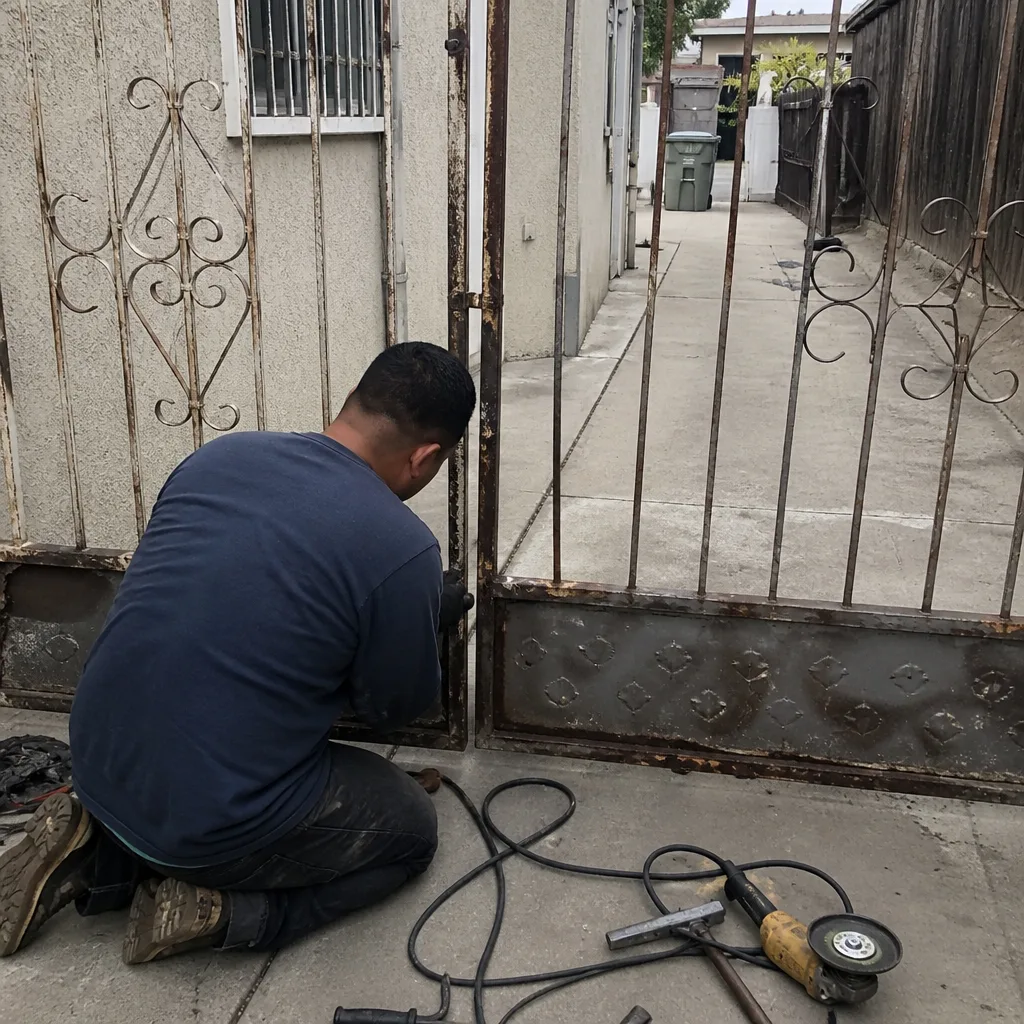 Before
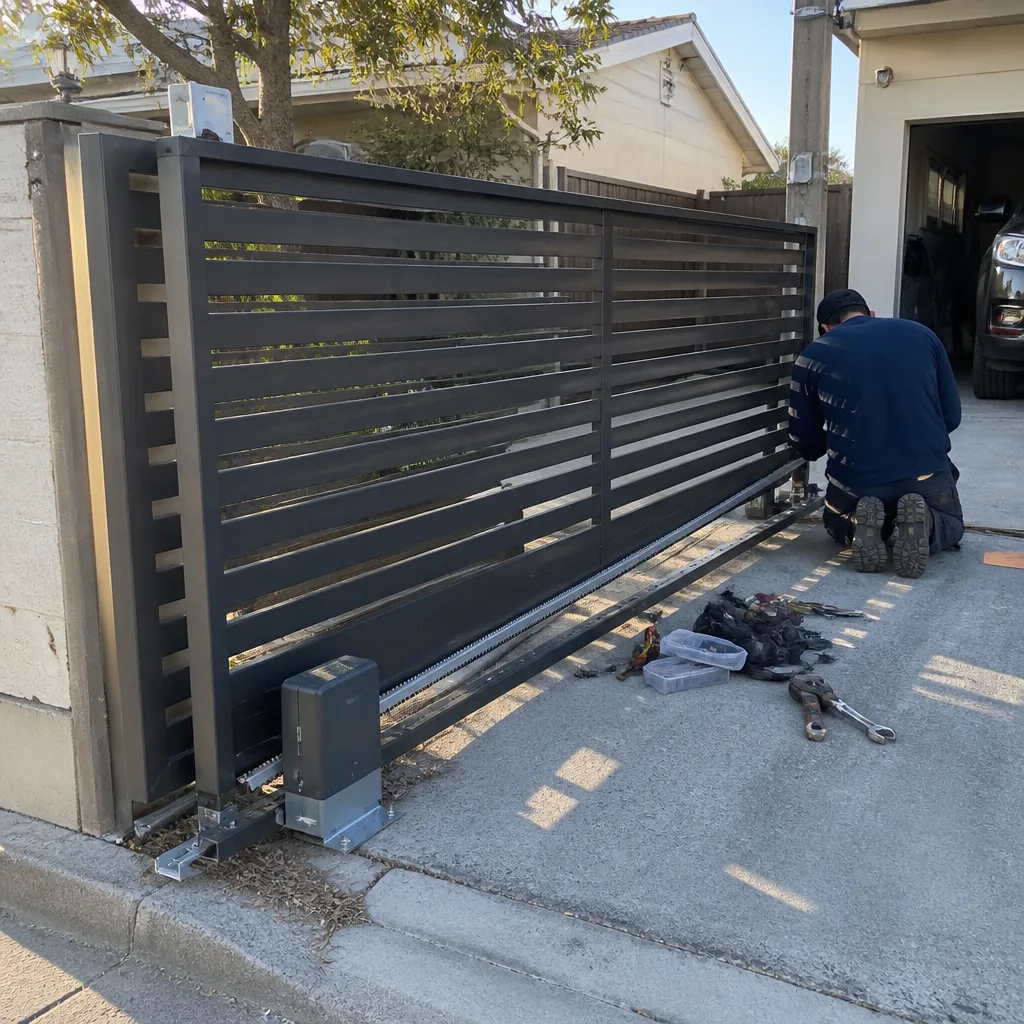 After
After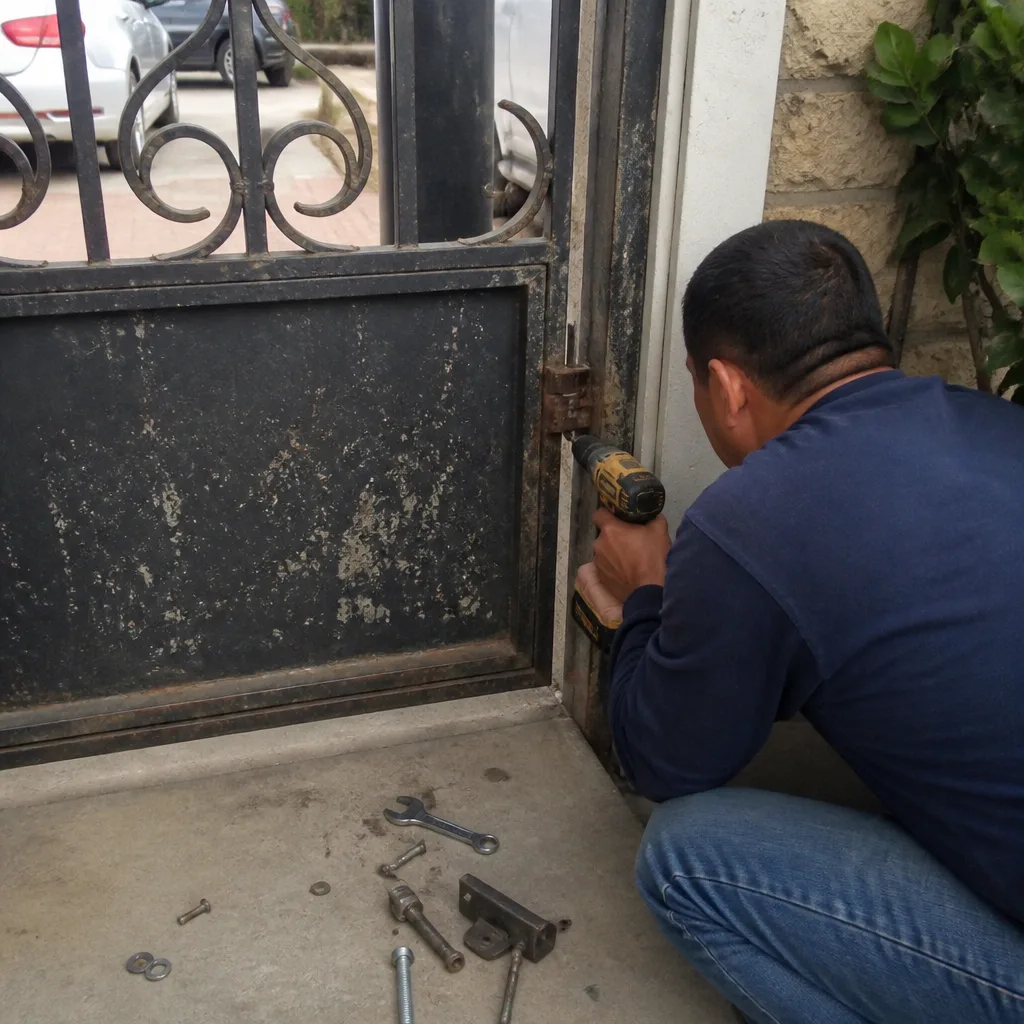 Before
 After
After Before
 After
After